Standing Water in Your Yard? Here's Why — and How to Fix It
Why water sits in OKC yards — grading, clay soil, downspout runoff — and which drain fixes which cause. Free on-site evaluation.
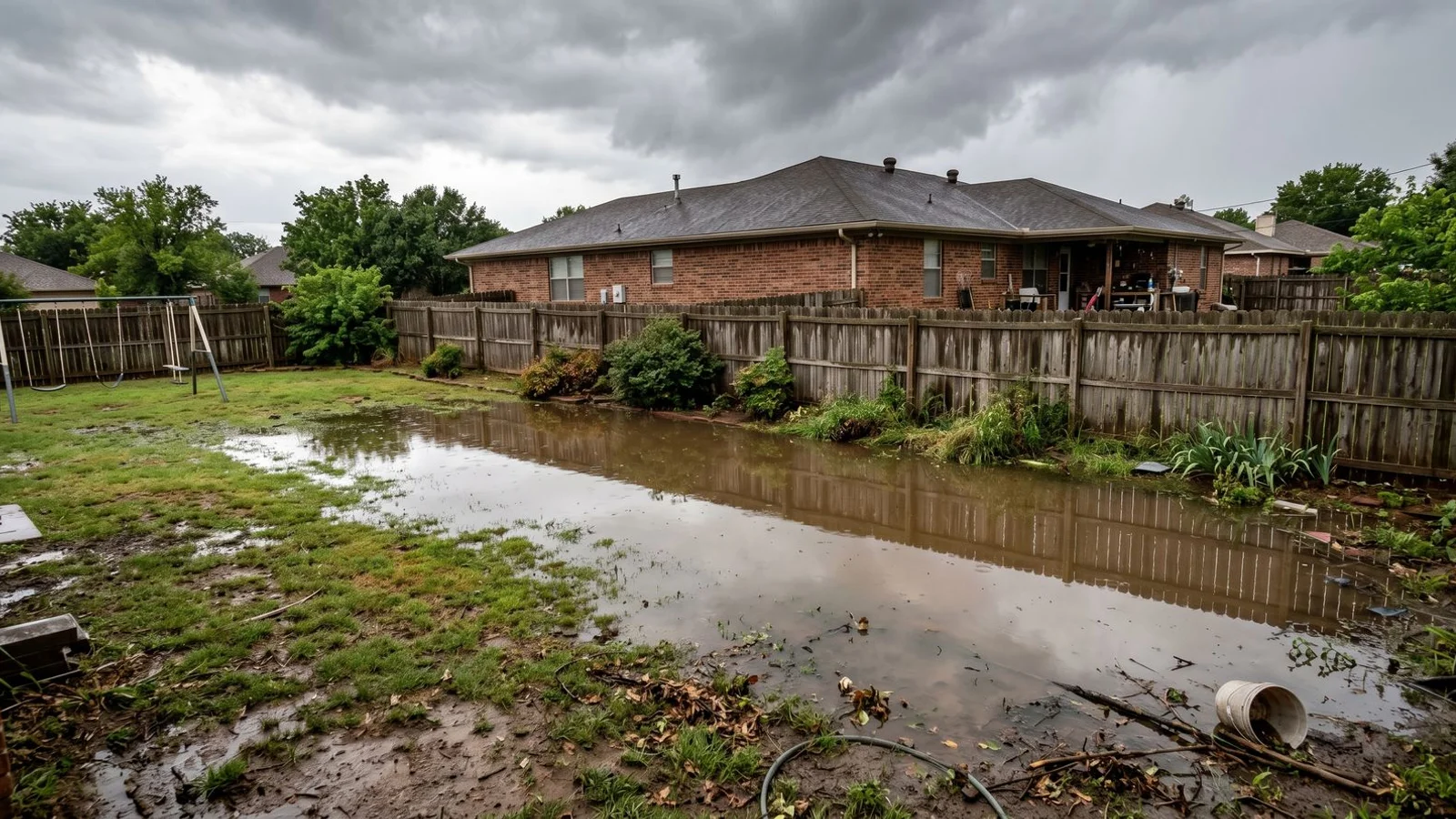
You already know that a soggy lawn is frustrating, but the real issue is what that trapped moisture is doing to your foundation.
If your property turns into a swamp every time it storms, the water is just a symptom. The underlying problem is usually bad grading, expansive clay soil, or downspout runoff with nowhere to go.
Finding effective standing water in yard solutions requires identifying the exact cause. We can help you determine which issue is killing your lawn and which drainage solution actually fixes it. Engineered yard drainage in Oklahoma City is built around the cause, not just the puddle. For a professional assessment, free evaluations are open across the OKC metro.
Standing water in yard solutions: The four causes in OKC
1. Poor grading (the yard doesn’t slope right)
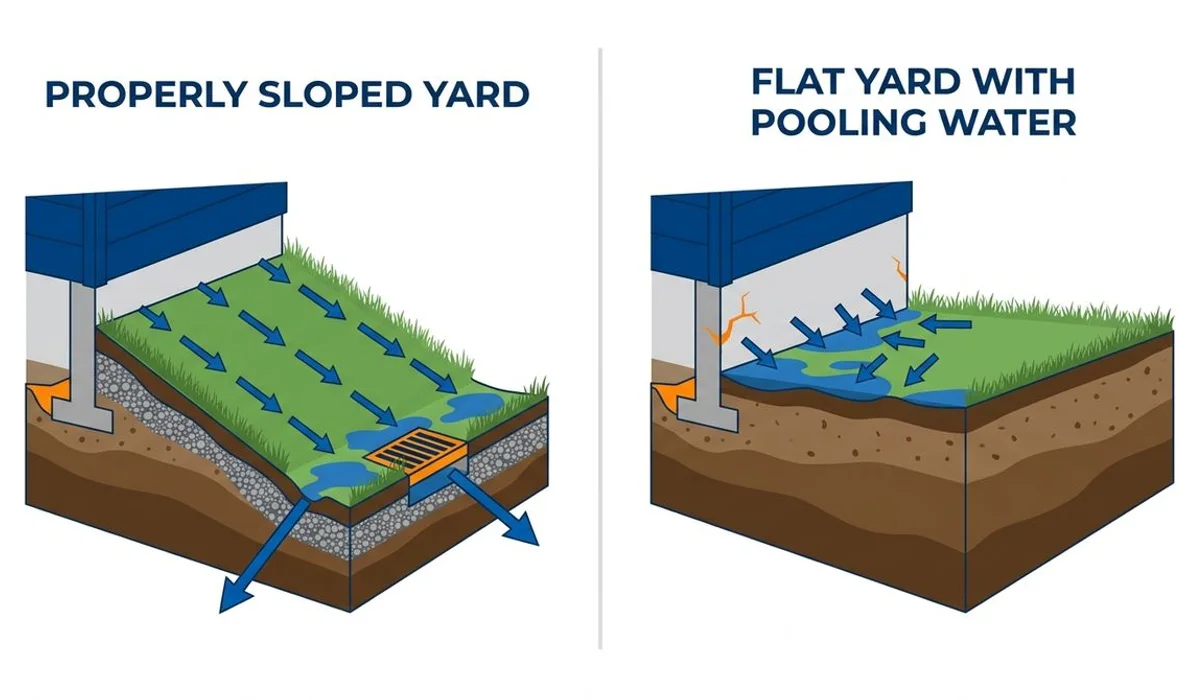
Water moves downhill, so your yard must slope away from the house to prevent pooling. If your yard’s lowest point is next to your house instead of away from it, every rain pushes water toward the foundation.
We see this problem constantly in new construction across Oklahoma City. The freshly graded dirt often settles within the first 12 months.
This settling reverses the slope and traps moisture right where you do not want it. Building codes like the International Residential Code (IRC) dictate that land must drop at least 6 inches within the first 10 feet of your exterior walls.
Tell-tale sign: The puddle is right against the foundation or in a clear dip that was not there when the house was built.
Fix: Regrading solves the surface angle, but it is often combined with a French drain or catch basin in the low spot for total protection.
2. Expansive clay soil
Oklahoma sits on heavy Permian red clay, which expands when wet and shrinks when dry. When this dense soil becomes saturated, it holds water like a sponge and leaves rain nowhere to go but up.
This specific red clay has extremely low permeability compared to sandy soils or loam. It absorbs moisture slowly but retains it intensely. We have to design systems that pull this trapped groundwater away because the soil itself will not drain. The resulting hydrostatic pressure can easily crack a basement wall or shift a concrete slab over time.
Tell-tale sign: The whole yard stays soggy for days after a storm, not just one low spot.
Fix: A sub-surface French drain creates a permanent exit route. This requires a trench typically 18 to 24 inches deep and 12 inches wide. We line this trench with heavy-duty landscape fabric, lay perforated pipe, and backfill with crushed limestone to pull the trapped water sideways to a gravity exit.
3. Downspouts dumping at the foundation
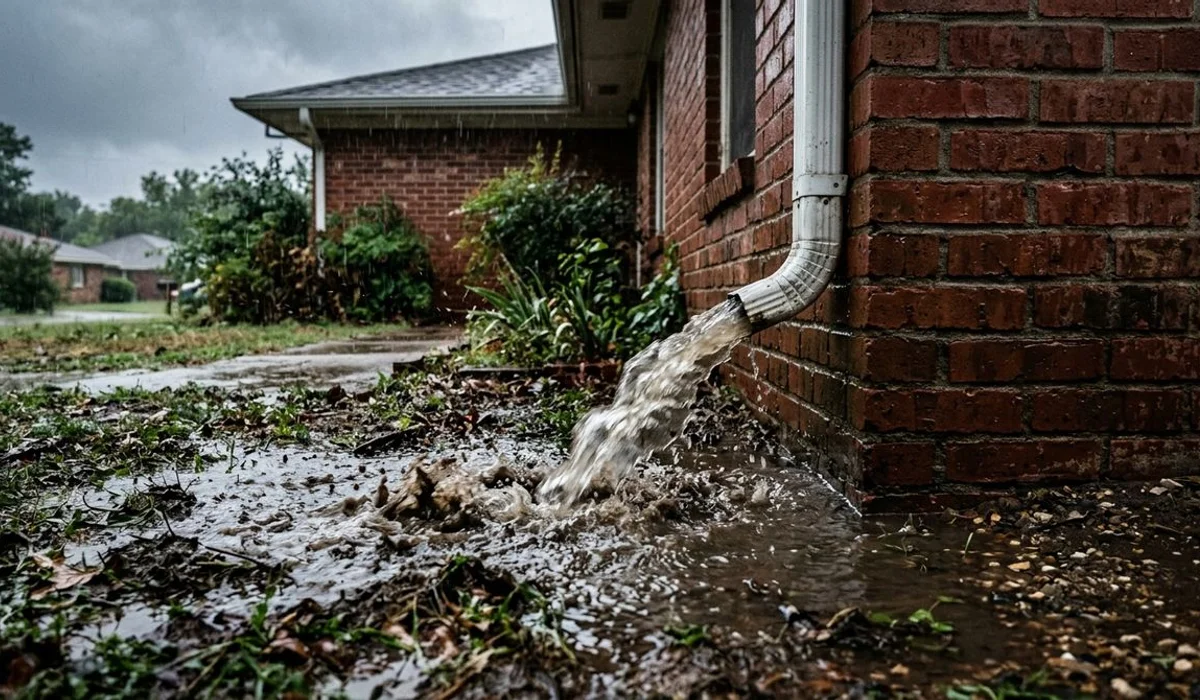
Concentrating roof runoff into a small area right next to your slab will overwhelm any grading setup. A standard residential roof can shed over 1,000 gallons of water during a single inch of rainfall.
If your gutters end at the corner of the house and just splash water onto a standard 1-foot splash block, you are creating a localized flood zone. Even perfectly angled soil cannot process that volume of liquid quickly enough.
Our team routinely fixes foundation heaving caused entirely by mismanaged gutter runoff. You have to move that volume of water completely out of the 10-foot danger zone surrounding your home.
Tell-tale sign: The worst puddle is directly under or near a downspout.
Fix: You need to extend the downspout to a catch basin or surface drain. The best approach routes the water out into the yard or directly to the curb using buried, solid PVC piping.
4. Low spots in the lawn or beds
A swampy yard fix sometimes just requires targeting a single sunken area or a flowerbed sitting below grade. Topsoil erosion or the removal of a large tree often leaves behind a hard clay bowl where water simply settles.
These isolated low spots act like basins because the surrounding prairie silt or topsoil has washed away. We often find these depressions far away from the house in a back corner. They turn into muddy traps that ruin grass and breed mosquitoes.
Tell-tale sign: The puddle is in one specific bowl, away from the house, and the rest of the yard drains fine.
Fix: Set a catch basin into the low spot and connect it to a gravity exit. Use smooth-wall PVC pipe instead of corrugated pipe, as corrugated lines tend to trap leaves and sediment during heavy spring storms.
Why OKC’s clay soil makes everything worse
Sandy soil and loam will drain naturally, but central Oklahoma’s expansive clay absolutely will not. This heavy soil can hold standing water for 48 hours or more after a storm.
During that entire window, your foundation is sitting in a wet, expanding sponge. That is exactly why the same yard grading that worked perfectly in Texas will fail miserably in Oklahoma City.
The soil composition is the main variable. April and May are historically our rainiest months, and a severe spring flash flood can drop two to three inches of rain in a single hour. When these storms hit, they completely overwhelm the clay’s ability to absorb anything, which is why understanding Oklahoma clay soil drainage comes down to three critical factors:
- Surface fixes alone usually fail. You have to give the water a pathway down into the ground, not just a place to sit on top of the clay.
- Gravity-fed exits matter more than basin count. A single well-placed exit pulling water from a 4-inch French drain trunk line beats six catch basins that just dead-end in the lawn.
- Flash-flood storms test the weak point. A drainage system that handles a normal rain may overflow during an intense spring downpour. You must size the pipes for the storm, not the average shower.
How a free on-site evaluation maps the fix
We perform all evaluations in person because the right fix depends entirely on your specific property layout. The 30 minutes spent walking your lot allows a professional to accurately map the problem and design a permanent solution.
Every property handles yard pooling water differently. Our site visit provides the data needed to choose between a simple surface fix or a deep trench system.
The typical evaluation process includes these five steps:
- Slope check. A precise laser level finds your actual low spots. This confirms whether a gravity-fed exit path is possible or if a sump pump is required.
- Soil and water-table check. A small test dig reveals whether the Permian clay is the main problem or just a contributing factor.
- Downspout audit. This step traces where each gutter ends to check if it is pouring directly onto the foundation.
- Exit-point planning. The process maps where the water can legally and safely go. Options usually include a pop-up emitter, a curb fitting, a swale, or daylighting onto a natural slope.
- Honest fix recommendation. Sometimes the answer is a simple $400 surface drain at one corner. Other times, it requires a unified French and surface drain system.
We will tell you the real answer and explain exactly why it works.
What to do today
If you have water sitting in your yard for more than 24 hours after a storm, you need to document the issue before calling a professional. Pooling is rarely the only symptom — our guide to the signs your yard needs a drainage system covers the other red flags worth checking while you’re out there. Gathering the right information right now will make finding standing water in yard solutions much easier.
Take these three critical steps immediately:
- Photograph it during the storm. Do not wait for the day after. A professional needs to see exactly where the water crests and flows, not just the muddy aftermath.
- Note your downspout endpoints. Check the ground next to each gutter exit and mark any obvious puddle spots near the concrete slab.
- Do not pour money into surface-level fixes. Adding sand or topsoil over saturated clay does not fix a drainage problem. This common mistake just buries the symptom and creates a muddy sponge.
Once you have your photos, send them our way. We will come out to inspect the lot, locate the true source of the pooling, and provide a clear plan to protect your home.
Contact our team today to schedule your free metro-area evaluation and get your yard back.
Related Guides
French Drain Cost in Oklahoma: What to Expect
Oklahoma French drain costs: exterior $10–$15/ft (~$1,000–$1,500), interior $50–$60/ft (~$5,000–$6,000). What drives price.
Signs You Need a Yard Drainage System
Soggy turf, eroding beds, a damp basement, mildew near the foundation — the signs your OKC yard needs drainage, and what an evaluation checks.
Frequently Asked Questions
How long should water take to drain from my yard after rain?
A few hours is normal, especially during heavy OKC flash-flood storms. Water lingering past 24 to 48 hours signals a drainage problem — usually poor grading, clay-soil saturation, or a downspout dumping at the foundation.
Is standing water actually bad for my foundation?
Yes. Prolonged pooling near the foundation pushes water toward the slab and worsens the expand-and-contract cycle of OKC's clay soil. That's the cycle that cracks slabs and creates basement leaks.
Can grading alone fix it, or do I need a drain?
Sometimes regrading is enough, especially if the yard has an obvious low spot near the house. But clay-soil lots often need a sub-surface drain (French drain) to actually move the water to a gravity exit, because the soil itself won't let it soak in fast enough.
Get a free on-site drainage evaluation
Free across the OKC metro. We'll map your slope, soil, and exit points before quoting.