OKC Storm Season Is Here: Get Your Yard Drainage Ready Before the Next Downpour
Central Oklahoma's spring flash-flood season is peaking. Here's how to prep your yard, foundation, and basement drainage before the next big storm hits the OKC metro.
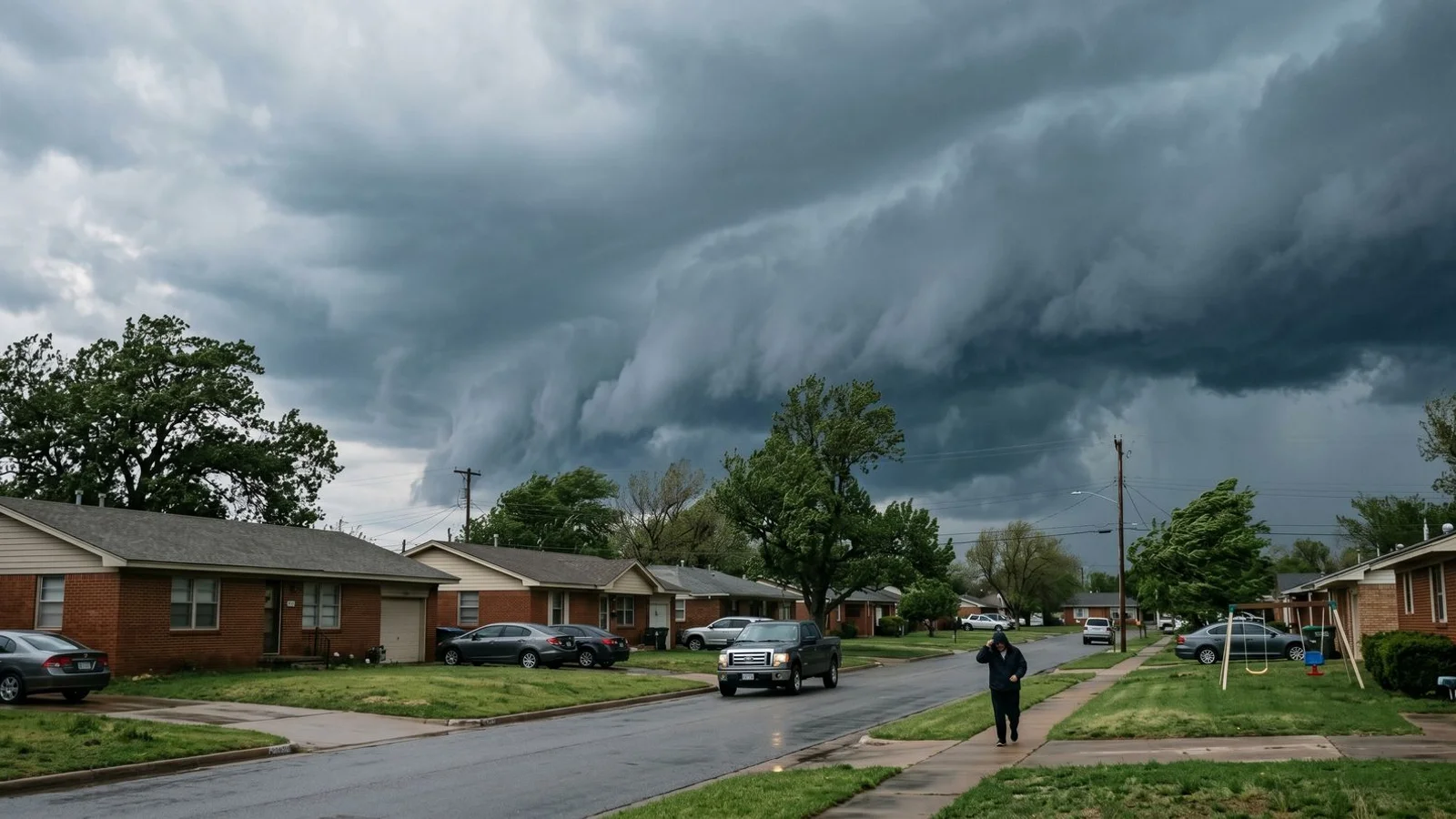
Central Oklahoma’s flash-flood season has officially started, and by every measurement we’re looking at a bigger-than-average spring. If your yard turned into a swamp during the last round of storms, the next round is going to make it worse — every saturated lot loses ground until the soil dries out, which in OKC’s expansive clay can take days.
Here’s the storm-prep checklist we walk every customer through this week, before the next system rolls in. If the checklist below points to a bigger problem, professional yard drainage in Oklahoma City is what turns a swampy lot into one that sheds water every storm.
1. Audit every downspout
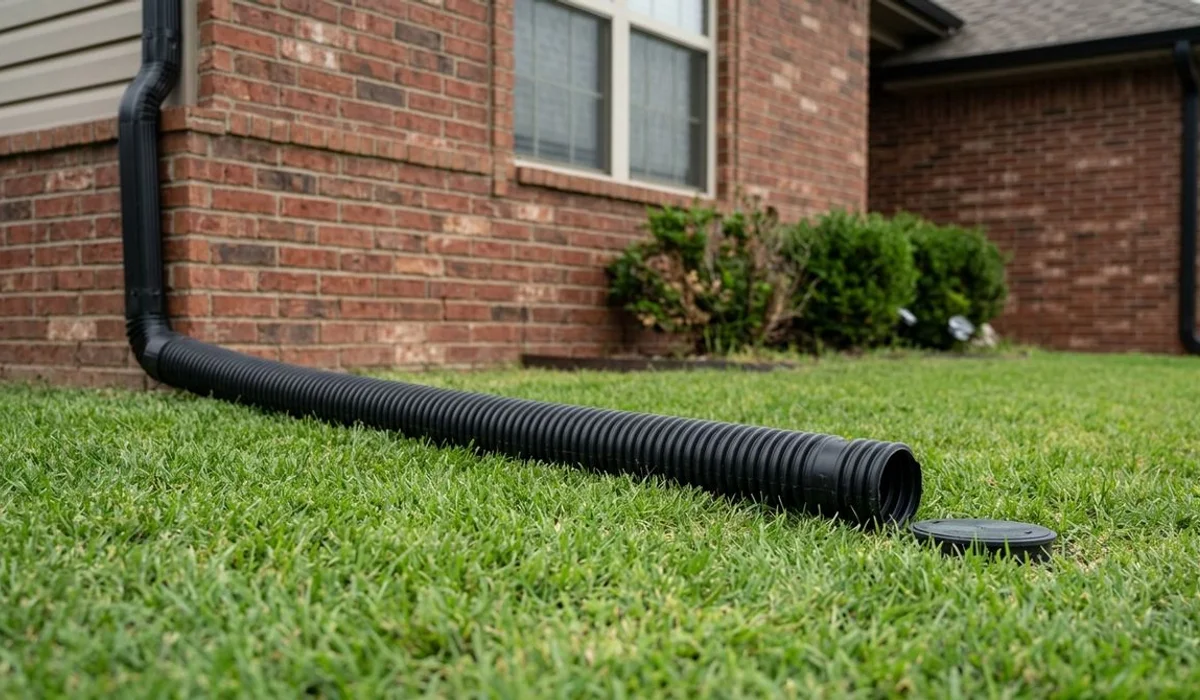
The single highest-impact thing you can do in 30 minutes: check where each downspout dumps its water. If the answer is “splash block at the foundation” or “right onto the lawn,” you’ve got a fixable problem.
What we look for on every storm-prep audit:
- Endpoint distance from the foundation. Splash blocks throw water about 12 to 18 inches. That’s not far enough to keep heavy gutter flow from saturating the soil right next to the slab.
- Grade away from the house. The ground should slope away from the foundation for at least the first 6 to 10 feet.
- Mulch and bed material. If beds are higher than the surrounding lawn next to the foundation, water has nowhere to drain except into the foundation.
Quick fixes that buy you most of the win:
- Add 6-foot rigid downspout extensions to every downspout pointing at the foundation
- Or route the downspout into a buried smooth-wall pipe to a pop-up emitter 15 to 20 feet out
2. Clear every catch basin and surface drain
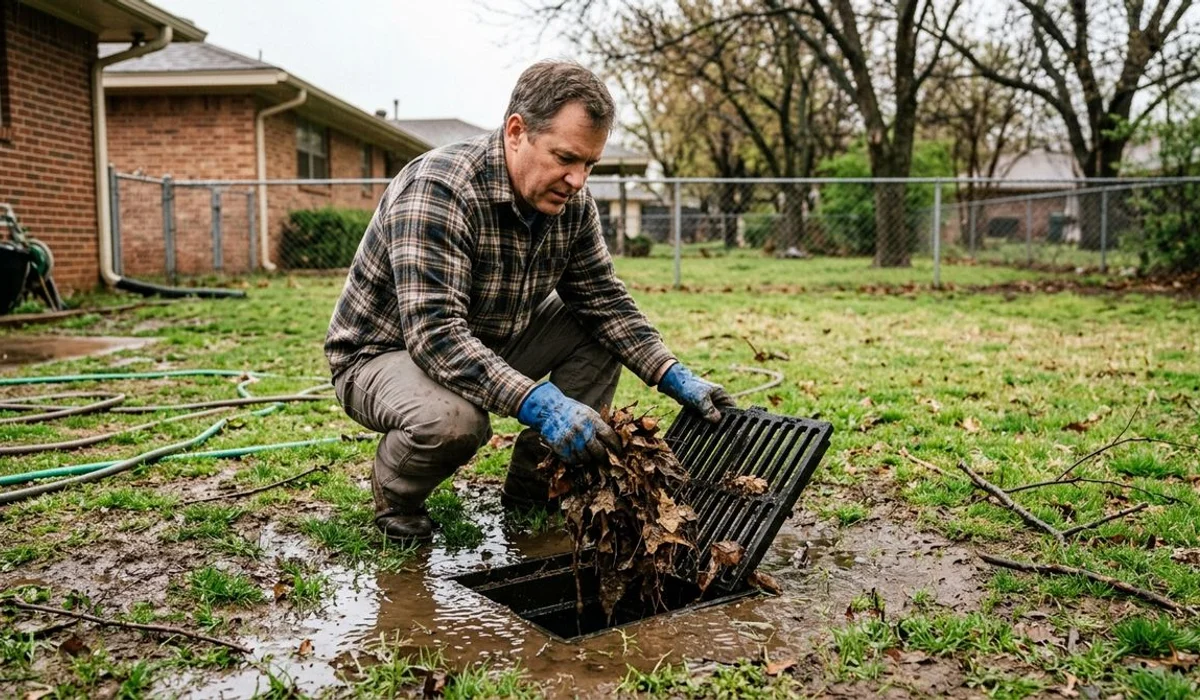
If you have catch basins or surface drains already, walk to each one and clear the grate. Spring is when grass clippings, mulch, and last-fall’s leaves collect on top of the inlet and starve it of flow.
A 10-second check at each basin:
- Lift the grate
- Reach in and clear any visible debris in the basin
- Look down the outlet pipe for visible blockage at the entry
If the basin is full of standing water or silt below the outlet pipe level, the line is clogged, not just the grate. That’s a hydro-jetting job. Don’t wait — a blocked drain during a flash-flood storm is the same as no drain at all.
3. Walk the perimeter after the next storm
Once a storm hits, put your boots on and walk the perimeter of the house during or right after the rain. Note three things:
- Where the water is actually pooling. Take photos. The puddles you see during the storm are what we need to design around, not the dry-day depressions.
- Where downspouts are dumping. Are the extensions you added staying put? Is any gutter overflowing?
- Any new low spots. Lots settle. A spot that drained fine last year might be holding water this year.
The 15 minutes you spend in the rain is the most useful diagnostic data any drainage contractor will ever see.
4. Test the sump pump (if you have one)
If your home has a basement and a sump pump, test it before the storm, not during. Pour a 5-gallon bucket of water into the sump basin and listen for the pump to kick on. It should:
- Engage within a few seconds of water filling the float-switch level
- Discharge water out the exterior discharge line within 10–15 seconds
- Stop on its own when the basin is empty
If the pump grinds, hums, or doesn’t engage, replace it now. A failed sump pump during a flash-flood storm is the difference between “the basement got slightly damp” and “the basement flooded to 6 inches.”
5. Note the high-risk forecast windows
OKC’s flash-flood season peaks April through June. The pattern that causes the most damage:
- 3+ inches of rain in 1 hour during a single severe storm
- 2+ inches of rain in 24 hours on already-saturated ground from the previous storm
When the National Weather Service is forecasting either pattern, that’s the day to:
- Park cars off any obvious pooling areas
- Clear all gutters and downspouts the day before
- Have towels, a wet/dry vac, and the sump pump tested
- Check your basement at the storm peak, not after
6. Know when to call
If you’re seeing any of these during the spring storm cycle, it’s time to get a real evaluation:
- Standing water in the yard for more than 24 hours after rain
- Water visibly running toward the house instead of away
- Wet spots, mildew smell, or efflorescence on basement walls
- A sump pump that’s running constantly during heavy storms
You can book a free on-site evaluation here or call us at (405) 562-8461. We typically have same-week availability through the spring season.
What we install when storm-prep isn’t enough
When downspout extensions and catch-basin cleanup aren’t doing it, the next step is usually a designed drainage system:
- A French drain along the yard’s low side to capture saturated groundwater before it reaches the foundation
- A catch basin + smooth-wall pipe network to handle surface runoff from downspouts and low spots
- An interior basement French drain when water is already getting through the slab
We design all three to work as one system feeding a single gravity-fed exit point. The right system, designed once, ends the seasonal scramble. Send us photos this week if you’re tired of fighting it every spring.
Daniel is the lead drainage contractor at OKC French Drains in Oklahoma City, with 10+ years engineering French and surface drainage systems for Central Oklahoma's clay soil.
Got a drainage question this article didn't answer?
Free on-site evaluations across the OKC metro. Send photos or call us.